
Hip Dips: What Causes Them and Which Treatments Actually Work
Content
Hip dips, the inward curves just below the hip bone on the side of the body, are completely normal. Plenty of fit, healthy people have them, and no amount of lunges will make a bone move. But if the dips bother you, it helps to know that not all of them have the same cause, and the cause determines what will work.
Some hip dips are almost entirely structural. Others are made more visible by fat sitting above and below the dip, or by tight connective tissue pulling the skin inward. Most are a combination. This guide explains how to tell which you're dealing with, and what fat transfer, AlloClae, and liposuction can realistically do for each.
Key takeaways
Hip dips are primarily shaped by your skeleton: the distance between the top of the pelvis and the top of the thigh bone.
Exercise can build the surrounding muscles, but it can't change bone structure.
Adding volume (fat transfer or AlloClae) fills the dip; liposuction around it can soften the "step" above and below.
The best plans usually combine both ideas: take a little from where the curve is too full, and add where it's hollow.
What causes hip dips?
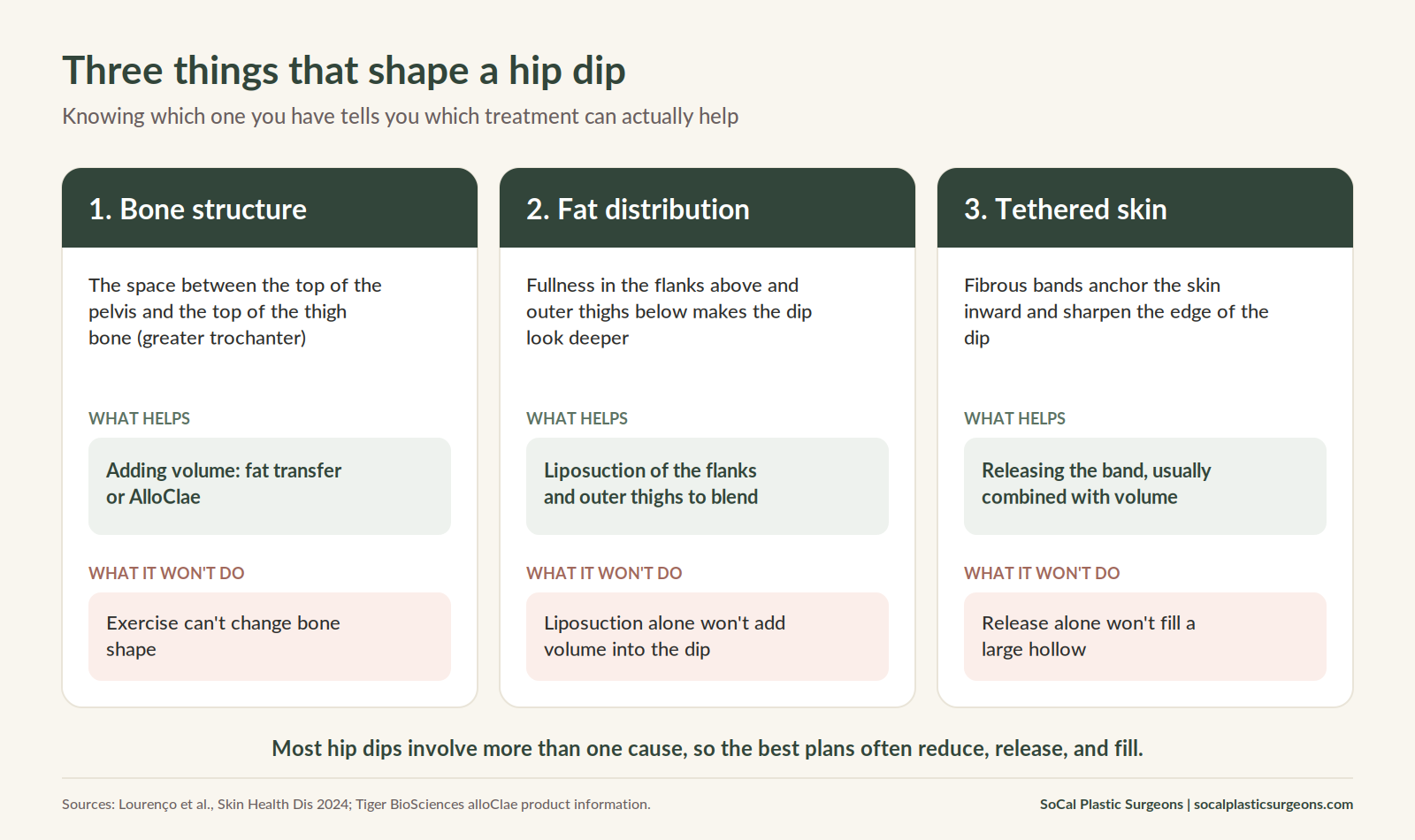
1. Bone structure (the part you can't change)
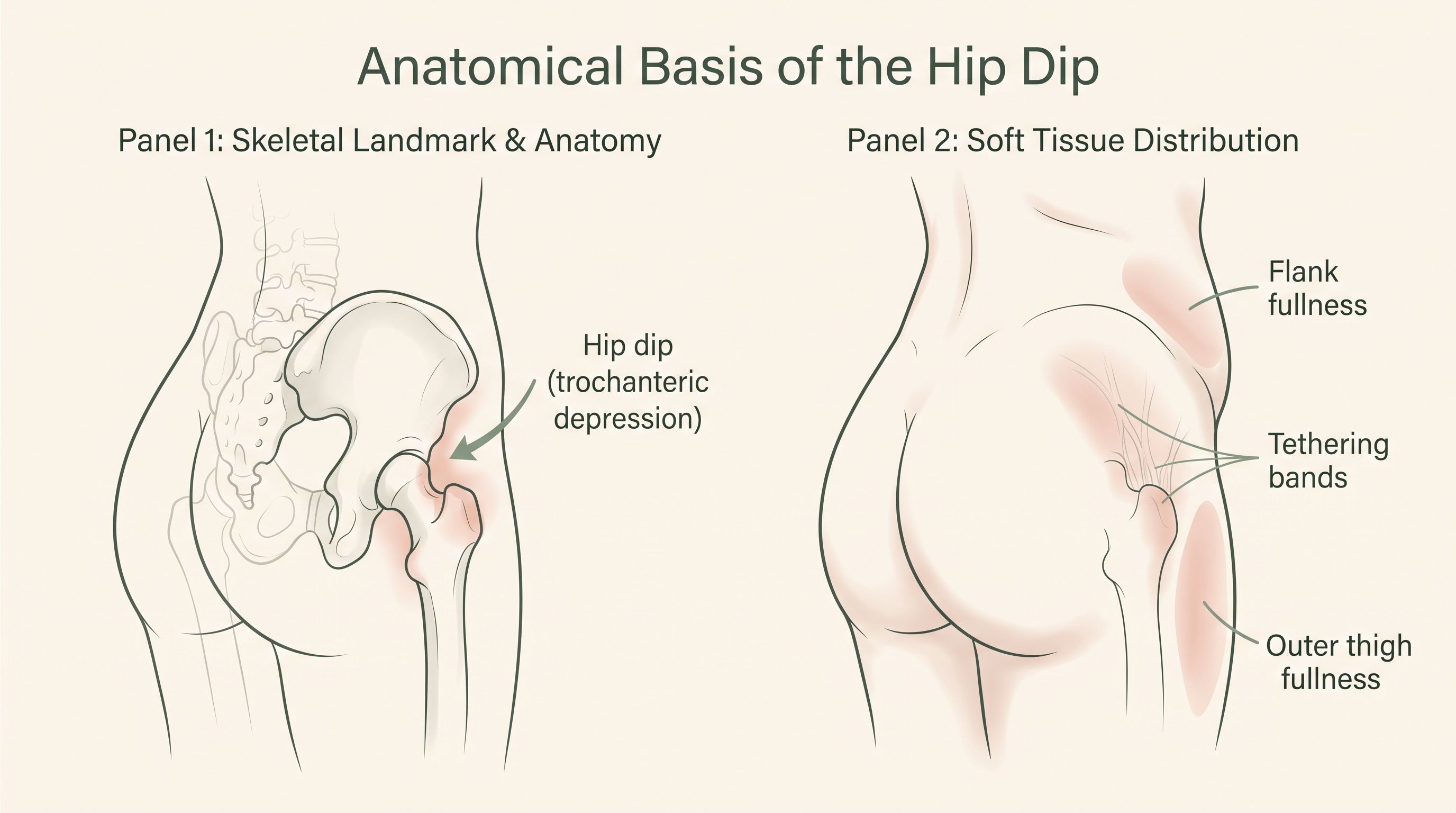
On the side of your body, two bony landmarks set the stage: the top of the pelvis (the iliac crest) and the bony knob at the top of the thigh bone (the greater trochanter). Hip dips sit in the region around and just below that knob, where several buttock and thigh muscles attach. Researchers describe it as the trochanteric depression, formed by the greater trochanter and the insertions of muscles including the gluteus medius (Lourenço et al., Skin Health and Disease).
How deep that depression looks depends on the width of your pelvis, the angle of your thigh bones, and how high the trochanter sits. That's inherited, and it's why two people at the same weight can have very different hip lines.
2. Fat distribution (the part that exaggerates the dip)
Fat above the dip (in the "love handle" or flank area) and below it (in the upper outer thigh, sometimes called "saddlebags") makes the hollow between them look deeper. In some patients, the dip itself isn't unusually deep; it simply sits between two full areas. Reducing that fullness can make the curve look smoother without adding anything.
3. Tethered skin (the part that pulls inward)
In some people, fibrous bands connect the skin to the deeper tissues along the hip. These bands can hold the skin inward even when there's fat nearby, which gives the dip a sharper edge. Dr. Nykiel describes a similar mechanism when explaining uneven buttock contours: sometimes "the collagen bands are actually so tight that they're pulling the skin," and releasing that band lets the surface "pop" back up (Why Are Some BBLs Lumpy?).
A quick mirror check: which type do you have?
This isn't a diagnosis, but it helps you have a more productive consultation.
Stand straight in front of a mirror, feet together, in fitted underwear or leggings.
Look for the step. Is there obvious fullness above the dip (flanks) or below it (outer thigh)? If so, fat distribution is part of your picture.
Pinch the dip itself. If the skin in the hollow feels thin and close to the underlying structure while the areas above and below are pinchable, the dip is likely mostly structural.
Shift your weight. Stand on one leg. If the dip deepens noticeably, the muscle attachments around the trochanter are contributing. That's normal and common.
Look for a sharp, puckered edge. A crisp line or dimple suggests tethering.
Take photos from the front, side, and back. They're useful at your consultation.
Can exercise get rid of hip dips?
Exercise can build the gluteus medius and the other muscles around the hip, which can round out the area slightly and make the lower body look more athletic. That's worth doing for its own sake. But it can't change the distance between your pelvis and thigh bone, and it can't target fat loss in a single spot. If your dips are mainly structural, even a dedicated program is unlikely to erase them.
Treatment options, matched to the cause
What's driving your hip dip | What can help | What it won't do |
|---|---|---|
Structural hollow | Adding volume: fat transfer (BBL / Skinny BBL) or AlloClae | Change bone shape |
Fullness above/below the dip | Liposuction of the flanks and/or outer thighs to blend the curve | Add volume into the dip |
Tethered skin | Releasing the band, typically combined with volume | Fill a large hollow on its own |
A mix of all three (most common) | A combined plan: reduce, release, and fill | Look identical on both sides (small asymmetry is normal) |
Option 1: Fat transfer (surgical)
If you have enough donor fat, fat transfer is often the most complete solution because it does two things at once: liposuction slims the areas above and below the dip, and the purified fat is placed into the hollow. In Dr. Nykiel's BBL technique, the hip dips are the first area he addresses:
"The first area that we target is what we call the frame of the buttocks, or the hip dip... trying to create a little bit more curvature. The BBL is unique in that it really allows us to balance the body." Dr. Matthew J. Nykiel, What Is a BBL?
For patients who don't want much additional buttock size, a Skinny BBL can focus most of the fat on the hip line and upper buttock. The trade-off is that it's surgery, with general anesthesia, compression garments, and a recovery period that includes time off direct sitting. If you're not sure you have enough fat, our guide to how much fat you need for a BBL walks through the math.
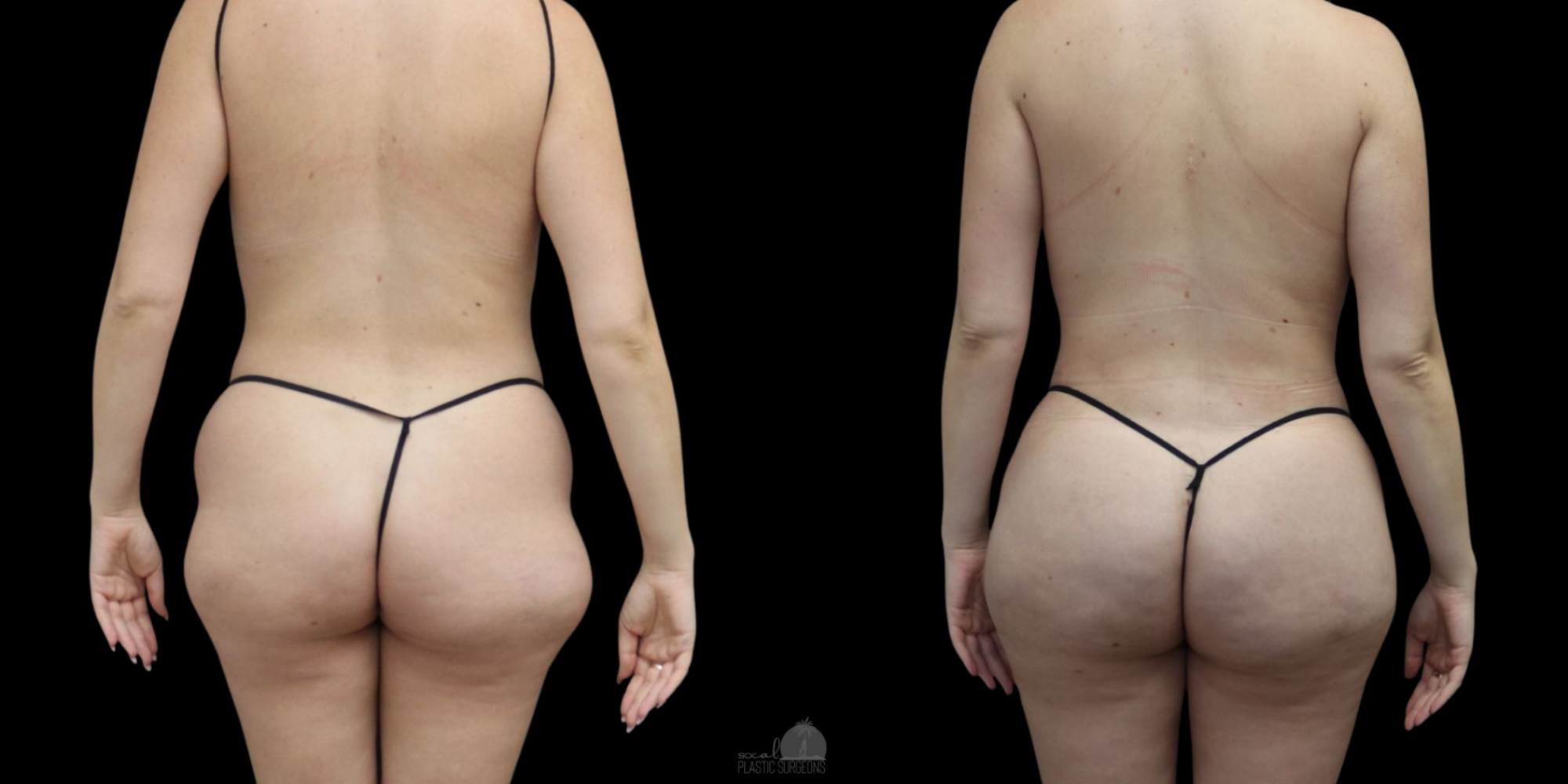
Option 2: AlloClae (non-surgical)
For patients who are lean, who've had liposuction before, or who don't want surgery, AlloClae is a practical middle ground. It's a structural adipose filler made from purified donor fat and placed under the skin through a blunt cannula, typically under local anesthesia and without liposuction.
Hip dips are one of the areas where AlloClae is being actively studied. The manufacturer reports an ongoing multi-center prospective clinical study of AlloClae in the hip dips at five sites, with volume assessments at 1, 3, 6, and 12 months (Tiger BioSciences). In other words, it's promising and under formal evaluation, which is part of why an experienced injector matters.
Dr. Nykiel's approach is conservative and incremental:
"Hip dips, we like to start at 25 cc's... Now, we absolutely can add more." Dr. Matthew J. Nykiel, AlloClae Explained
He typically adds product every six weeks to three months, so the contour can be built gradually and evaluated between sessions. Treatment usually takes 30 to 60 minutes, most patients resume normal activities within a day or two, and results commonly last one to three years.
AlloClae is placed in the subcutaneous layer, where fat naturally exists, and it isn't appropriate for patients with an active infection or a history of severe allergic reactions (AlloClae Safety Information). Potential side effects include nodules, pain, bruising, and infection.
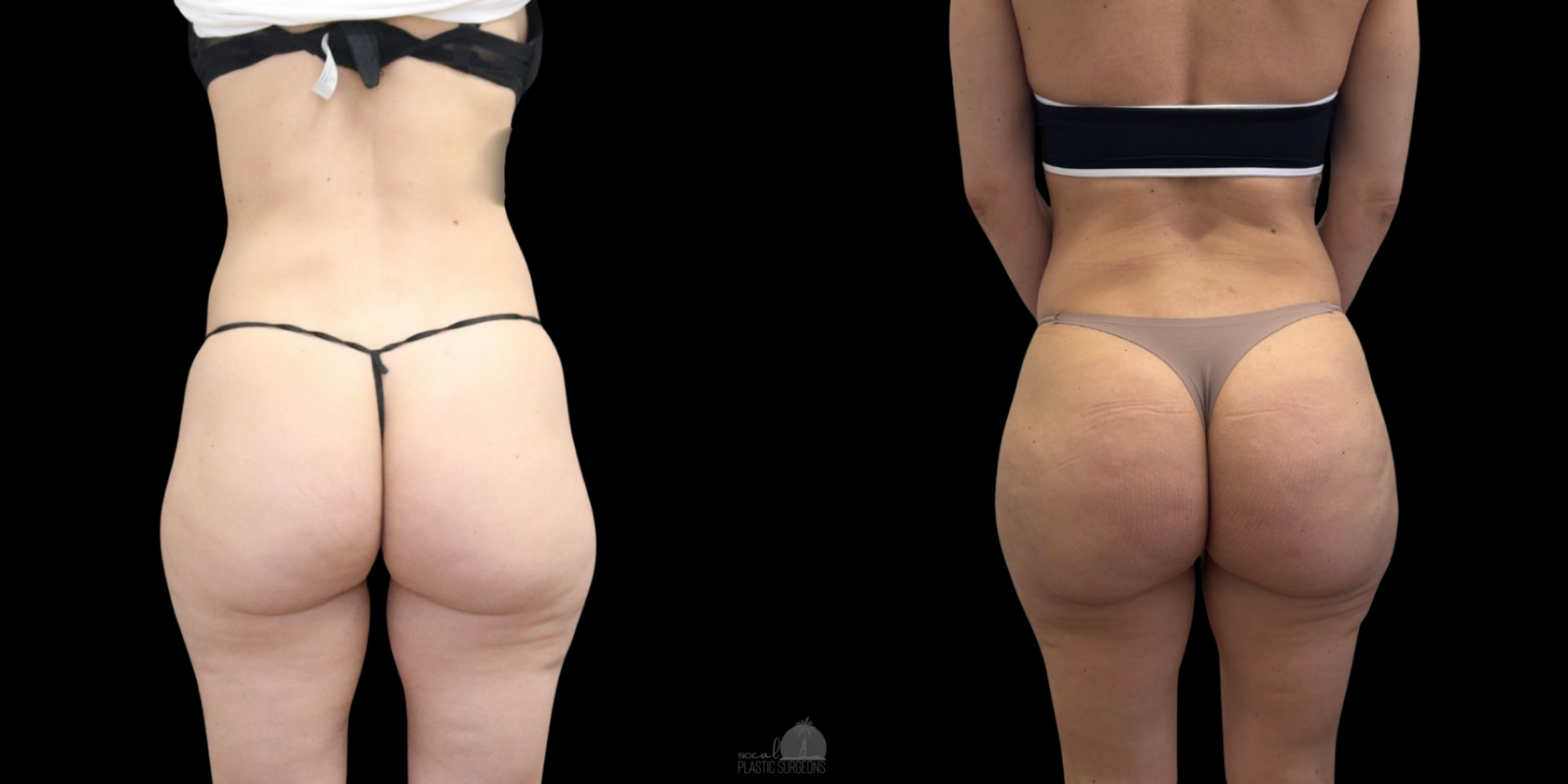
Option 3: Liposuction alone
If your dip is modest and the main problem is fullness above or below it, liposuction of the flanks or outer thighs may be enough to make the curve read as smooth. It won't add volume into the dip. For many patients, it's most effective as one half of a fat-transfer plan. Learn more about our VASER liposuction approach.
What about other fillers?
Hyaluronic acid and biostimulatory fillers have been used in the hip area. One small study treated 11 women with a large-particle hyaluronic acid under ultrasound guidance, using about 10 mL per side (Lourenço et al.). Biostimulators like Sculptra and diluted Radiesse work by stimulating collagen over several sessions. We compare those options in Non-Surgical BBL: Butt Enhancement Options Without Surgery.
Fat transfer vs. AlloClae for hip dips
Fat transfer (BBL / Skinny BBL) | AlloClae | |
|---|---|---|
Uses your own fat | Yes | No; purified donor fat |
Slims surrounding areas | Yes, through liposuction | No |
Anesthesia | General | Local |
Downtime | Weeks, with sitting restrictions | Usually 1-2 days |
Built gradually | Usually one surgery, sometimes a touch-up | Yes, sessions every 6 weeks to 3 months |
Longevity | Surviving fat is long-lasting, though it changes with weight | Commonly 1-3 years |
Best for | Patients with donor fat who want overall reshaping | Lean patients or those avoiding surgery |
For a deeper comparison, read AlloClae vs. Fat Transfer: Choosing Between Donor Tissue and Your Own Fat.
Hip dips after weight loss
Many patients notice their hip dips for the first time after losing a significant amount of weight, including on GLP-1 medications like semaglutide and tirzepatide. Nothing about the skeleton has changed, but the fat that used to soften the transition between the waist, hip, and thigh is thinner, so the bony contour shows more.
This group often has two overlapping concerns: the dips themselves and a general loss of volume in the buttocks. It also tends to have less donor fat than before, which can make a surgical fat transfer harder to plan. For these patients, the right approach depends on how much fat is left and whether the skin has lost elasticity. Some are good candidates for a Skinny BBL. Others do better with AlloClae, which doesn't require any donor fat. If loose skin is part of the picture, that needs to be addressed separately, since neither fat nor filler will tighten it. Before any procedure, it's best to reach a stable weight. We cover this in more depth in Ozempic Face and Body.
Setting realistic expectations
A few truths help patients get the result they actually want:
Softening often beats erasing. A perfectly straight line from waist to thigh can look unnatural. Most patients are happiest when the dip is reduced and the transition looks smooth.
Some asymmetry is normal. Your two sides aren't identical to begin with, and your surgeon will usually treat them slightly differently.
Weight changes matter. Transferred fat grows and shrinks with your weight, so stability protects the result.
Frequently asked questions
Are hip dips a sign of being out of shape?
No. They're a normal feature of skeletal anatomy and show up at every fitness level and body size.
Can hip dips be fixed permanently?
Fat that survives transfer is long-lasting, although it changes with your weight. AlloClae typically lasts one to three years and can be maintained with additional sessions.
How much AlloClae do hip dips need?
Dr. Nykiel usually starts around 25 cc per side and builds from there based on how the contour responds. Your plan depends on the depth of the dip and your goals.
Can I fix hip dips without surgery?
Yes. AlloClae and some injectable fillers can add volume without surgery. They won't slim the surrounding areas the way liposuction does, so your surgeon may discuss both.
Is a BBL just for hip dips worth it?
If you have donor fat and would also like a slimmer waist or better upper-buttock definition, fat transfer can address all of it at once. If you only want the dips softened, a non-surgical option may be a better fit.
Get a plan built around your anatomy
Because hip dips have more than one cause, the right treatment depends on an in-person look at your bone structure, fat distribution, and skin. Book a consultation with Dr. Nykiel in Newport Beach or Upland, or start with a virtual consultation. You'll leave knowing whether your dips are best treated by adding volume, reducing it around them, or both. Browse our AlloClae and Skinny BBL results to see the range of outcomes.
Sources
Lourenço L, et al. Hip dips technique: Filling lateral depressions with hyaluronic acid of large particles. Skin Health and Disease. 2024;4(6):e461.
Tiger BioSciences. alloClae product information and ongoing hip-dip clinical study.
ASPS, PSF, The Aesthetic Society, ASERF. Gluteal Fat Grafting: A Joint Safety Statement. 2022.
Nykiel MJ. AlloClae Explained, What Is a BBL?, and Why Are Some BBLs Lumpy?. SoCal Plastic Surgeons YouTube channel.